EES Entry/Exit System Explained for Travellers (2026)
The EU Entry/Exit System in late 2026: who registers, what's collected, children, the rollout dates, wait times, the EES app, 90/180 days and EES vs ETIAS.
 By Elad · Nov 21, 2026 · 7 min read
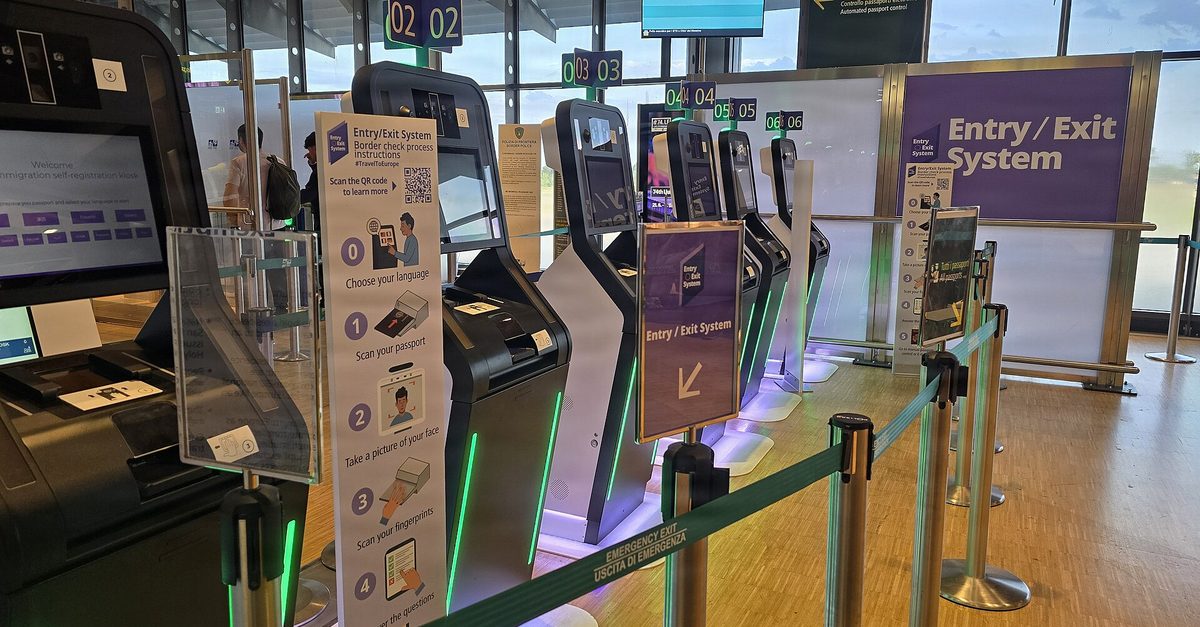
The Entry/Exit System (EES) is the EU's digital border record. It replaced passport stamps for most non-EU visitors to Schengen countries, and it has been fully running since 10 April 2026. You don't apply for it and you don't pay for it: you register at the border the first time you cross.
To keep your own count of the 90 days it tracks, use our free Schengen calculator or NomadPoint (we make it), which counts your Schengen days from your trips. NomadPoint is not an EES app and doesn't connect to EES.
The short answer:
- What it is: an automated system that records each entry and exit of non-EU nationals on a short stay, with your passport data, a face photo and fingerprints.
- Who: non-EU nationals visiting for up to 90 days in any 180, with or without a visa. That includes UK, US, Canadian and Australian passport holders.
- When: it started on 12 October 2025, rolled out over 6 months, and has been fully operational at all external borders since 10 April 2026.
- Cost: free. There's nothing to apply for in advance.
- ETIAS is different: a €20 online authorisation that is not running yet. As of 19 November 2026 the EU hasn't announced a start date.
All facts below come from the EU's official Travel to Europe site, the European Commission and GOV.UK, checked 19 November 2026.
EES vs ETIAS at a glance
| EES | ETIAS | |
|---|---|---|
| What it is | A digital record of each border crossing | A travel authorisation you apply for online |
| Status, 19 Nov 2026 | Fully operational since 10 April 2026 | Not in operation; no start date announced |
| Cost | Free | €20 |
| Where you do it | At the border, the first time you cross | Online, before you travel |
| What you give | Passport data, face photo, fingerprints | An online application and the €20 fee |
| How long it lasts | Entry and exit records kept for 3 years | Valid 3 years or until your passport expires |
| Countries | 29 | 30 |
Sources: EES FAQ, Data held by the EES, ETIAS official site, ETIAS FAQ, European Commission on ETIAS.
Which countries use EES?
29 countries: Austria, Belgium, Bulgaria, Croatia, Czechia, Denmark, Estonia, Finland, France, Germany, Greece, Hungary, Iceland, Italy, Latvia, Liechtenstein, Lithuania, Luxembourg, Malta, the Netherlands, Norway, Poland, Portugal, Romania, Slovakia, Slovenia, Spain, Sweden and Switzerland.
Cyprus and Ireland don't use it. The EU says passports are still stamped by hand in Cyprus, and GOV.UK notes EES does not apply when travelling to either country.
Who has to register, and who doesn't?
EES applies if you're a non-EU national on a short stay, whether you need a short-stay visa or not. "Non-EU" here means you're not a citizen of an EU country, Iceland, Liechtenstein, Norway or Switzerland.
It does not apply to, among others (full list):
- Citizens of the 29 EES countries, Cyprus and Ireland.
- Holders of residence permits and long-stay visas.
- Nationals of Andorra, Monaco and San Marino, and Vatican passport holders.
- Non-EU family members of EU citizens who hold a residence card.
UK note: GOV.UK says Brits legally resident in the EU, Norway, Iceland, Liechtenstein or Switzerland are exempt if they show their residence document, and UK-EU dual citizens using their EU passport are exempt too.
What happens at the border
- First crossing: a border officer, or a self-service kiosk if there is one, takes your face photo and scans your fingerprints. Your passport isn't stamped.
- Later crossings: your data is already on file, so the officer only verifies your face and fingerprints. That's quicker.
- Leaving: your exit is recorded too. That exit is what stops your 90-day count.
If you refuse to give your fingerprints or photo, you'll be refused entry.
From the UK by ferry or train: at the Port of Dover, Eurotunnel Le Shuttle at Folkestone and Eurostar at St Pancras, EES checks happen before you leave the UK.
What data does EES collect?
The EU lists four things: the data in your passport (name, date of birth and so on), the date and place of each entry and exit, your face image and fingerprints, and whether you were refused entry.
If you don't need a visa, EES stores 4 fingerprints and your face image. If you have a Schengen visa, it stores only your face image, because your fingerprints are already in the visa system.
Entry and exit records are kept for 3 years. If no exit is recorded, your data is kept for 5 years from the end of your authorised stay.
Children and EES
Children are registered too. The EU says that currently, the fingerprints of children under 12 are not scanned, even though they are subject to EES. Their face image and passport data are still recorded.
Is there an EES app?
Not one you need. The EU's optional Travel to Europe app lets non-EU travellers with a biometric passport pre-register their passport data and face photo up to 72 hours before crossing. As of 19 November 2026 the EU lists only two countries using it: Sweden (passport data, face image and the entry questionnaire) and Portugal (the entry questionnaire only). It doesn't replace the border check (Travel to Europe app).
GOV.UK's line for UK travellers is simple: "You do not need to take any action before you arrive at the border." Any website charging you to "apply for EES" is not official.
Wait times
Neither the EU nor GOV.UK publishes wait times. GOV.UK warns that EES "may take each passenger extra time to complete so be prepared to wait longer than usual at the border". The first crossing takes longest, so allow extra time on your first trip.
How EES counts your 90/180 days
The rule hasn't changed: up to 90 days in any 180-day period, counted as one period across all 29 countries. What changed is that the border now has your exact dates.
You can check your remaining days with the EU's Check how long you can stay tool. Two limits worth knowing:
- It does not count any visit that began before 10 April 2026. By late 2026 that matters less, but it's why older counts can look too generous.
- It's only as good as the record. A missed exit makes your days look used up when they aren't. Read what to do when EES shows the wrong days left.
So keep your own count in our free Schengen calculator. For worked examples, see the 90/180 rule for UK travellers.
Where NomadPoint fits
NomadPoint, the app we make, is a trip planner for iPhone, iPad, Mac and Apple Watch. It doesn't register you for EES and can't see your EES record. What it does is count your Schengen 90/180 days from the trips you plan, so you know your days left before the border tells you.
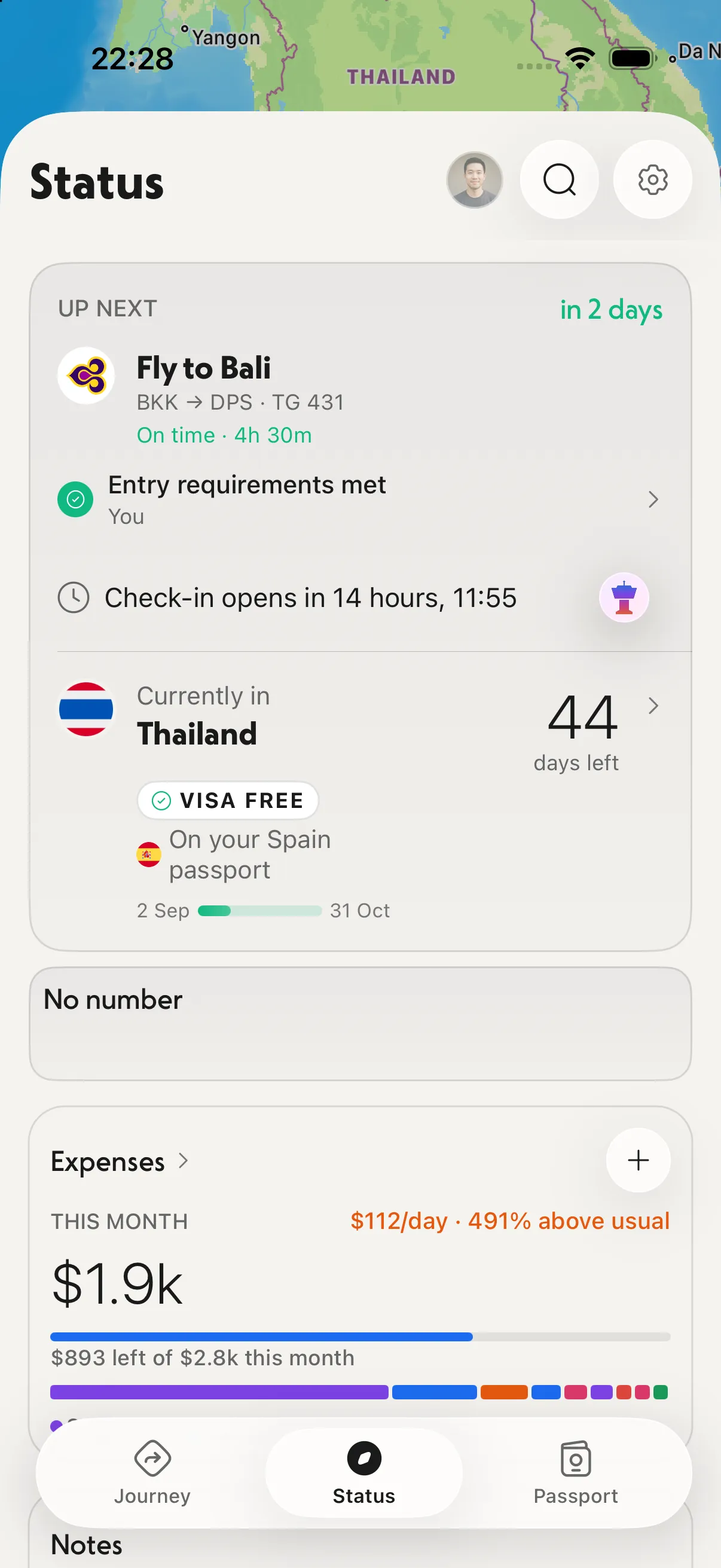
The Status screen: your next flight, whether you meet the entry rules, and days left where you are (here Thailand, not Schengen).
Entry rules and days left, including Schengen 90/180, are free for one destination. Pro covers every border and alerts you before a stay allowance runs out.
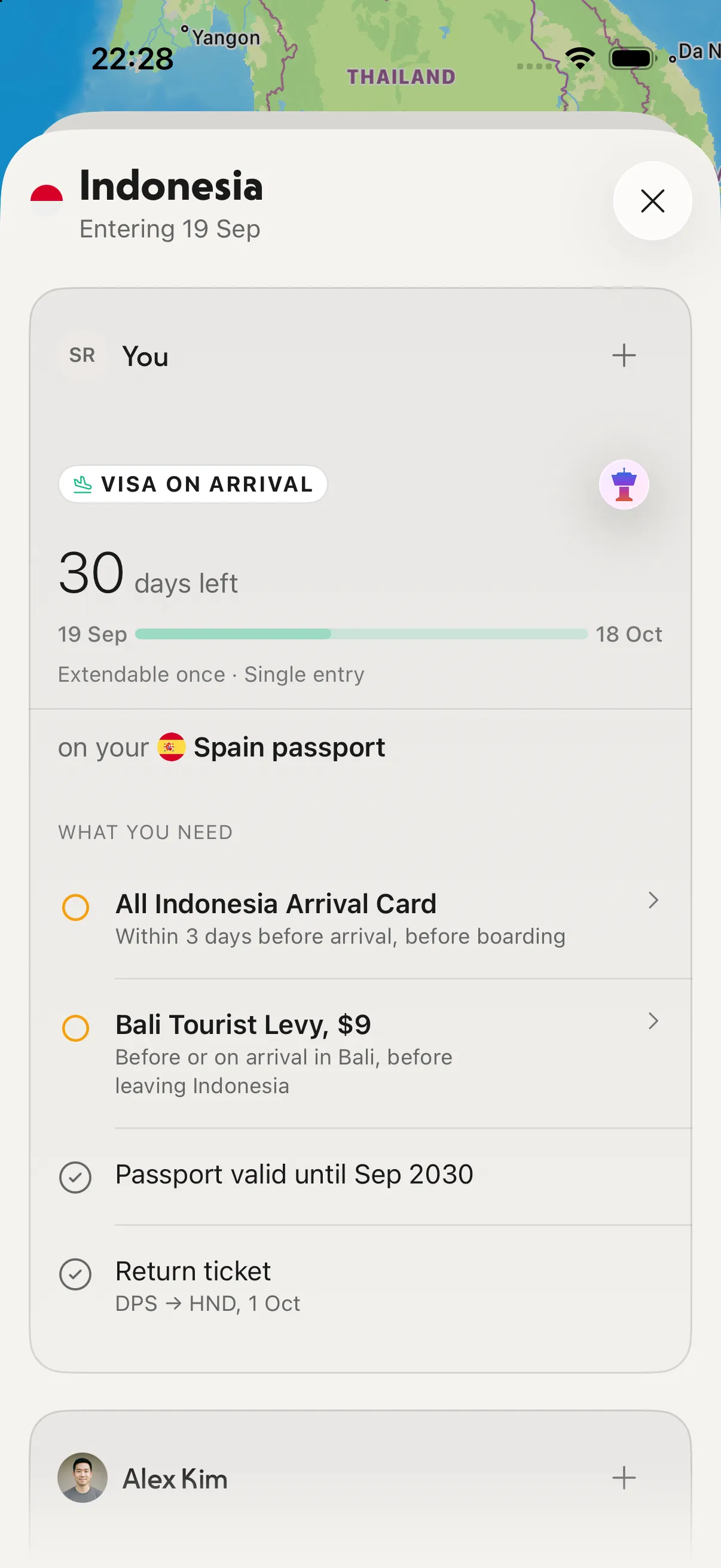
The entry card for a destination: days left and what you need to get in.
NomadPoint Pro is $39.99 a year with a 7-day free trial in the US, or $7.99 a month (see pricing). The app also checks your passport's expiry against the trip; for Schengen's own passport rules, read the 6-month passport rule.
Frequently asked questions
When did the EES start?
On 12 October 2025, with a gradual rollout over 6 months that ended on 9 April 2026. EES has been fully operational at all external border crossings of the 29 countries since 10 April 2026.
Do I need to apply or pay for EES?
No. EES registration is free and happens at the border. There's no application form. The only optional step is pre-registering in the Travel to Europe app, currently only for Sweden and Portugal.
Does EES apply to UK and US citizens?
Yes. UK and US passport holders visiting for a short stay are non-EU nationals, so they're registered on their first crossing. UK citizens resident in the EU with a residence document, and dual citizens using an EU passport, are exempt.
What is the difference between EES and ETIAS?
EES records your crossings at the border and is running now. ETIAS is a €20 online authorisation for visa-free travellers that you'll apply for before travelling. It isn't running yet: the EU says it will announce the start date several months before launch. GOV.UK still says ETIAS is expected to start "from Autumn 2026". Our ETIAS guide covers its cost, who needs it and how to apply safely.
Do children need to register for EES?
Yes, children are subject to EES. Children under 12 currently don't have their fingerprints scanned, but their face image and passport data are recorded.
Know your days before the border does. NomadPoint counts your Schengen days from your own trips, free for one destination. Free to download.
Elad · Founder of NomadPoint
I build NomadPoint and write these guides. Spot something wrong or out of date? Write to me at support@nomadpoint.app.