 EN
 עברית
 Español
 Français
 Deutsch
 Português
Da Nang Digital Nomad Guide: A Month, Week by Week
A month in Da Nang for digital nomads, planned week by week: where to base, Hoi An and Hue side trips, the rainy season, the Vietnam e-visa, flights out.
Free on the App Store: plan trips, track visa days
A month in Da Nang works well as one journey with three bases: two weeks by the beach in Da Nang, a week in Hoi An, and a few nights in Hue before you fly out of Da Nang. Plan it for the drier first half of the year, since the central coast gets most of its rain from September to December. Most passports will need Vietnam's e-visa, which covers up to 90 days.
This is an example plan, built step by step the way we'd set it up in NomadPoint. We haven't written it from a trip of our own, and every fact below links to its source.
Disclosure: we make NomadPoint. Facts checked on 4 November 2026.
The month at a glance
| Week | Base | Nights | Getting there | What the week is for |
|---|---|---|---|---|
| 1 | Da Nang, My Khe or An Thuong | 7 | Fly into Da Nang International Airport (DAD) | Settle in, find a desk and a routine |
| 2 | Da Nang, same stay | 7 | Already there | Work days, a day out on the Son Tra peninsula |
| 3 | Hoi An | 7 | By road, south of Da Nang | Quieter week, the old town in the evenings |
| 4 | Hue, then back to Da Nang | 3 + 4 | Road over the Hai Van Pass, or the train | Hue's monuments, then fly out from Da Nang |
That's 28 nights and three stay changes. The Hue leg is the one you can drop if the month gets too busy: stay in Hoi An for a fourth week and do Hue as a long day trip instead.
Where remote workers base themselves
My Khe and An Thuong (Da Nang). The stretch behind My Khe beach on the east side of the river is where many longer-stay visitors look first. An Thuong is a grid of small streets a few blocks back from the beach, with cafes, short-let apartments and restaurants close together. It suits people who want to walk everywhere and swim before work.
Son Tra. The Son Tra peninsula sits north of the beach strip. Staying at its foot is quieter and greener, but you'll rely more on a scooter or ride-hailing to get to cafes and shops.
Hoi An. Hoi An's old town is a UNESCO World Heritage Site, and many people stay in the villages and rice-field areas around it rather than in the centre. It's slower than Da Nang, which is why we'd use it for one focused week rather than the whole month.
If you're still choosing between Da Nang and other cities, our list of the best cities for digital nomads puts it next to a few alternatives.
Side trips and getting around
Da Nang to Hoi An. Hoi An is south of Da Nang and you get there by road: a taxi, a ride-hailing car or a hired driver. For a move between bases with luggage, a car booked for a set time is the simplest option.
Da Nang to Hue by train. Vietnam Railways sells tickets online at dsvn.vn. Besides the regular north-south trains, a tourist service called the Central Heritage Connection runs between Hue and Da Nang in about three hours, with morning and afternoon trips in both directions. Check current departure times on the railway's site before you build the day around one.
Da Nang to Hue by road. The road option goes over the Hai Van Pass. Many people hire a car with a driver or ride a motorbike so they can stop at the top and along the coast. We'd take the road one way and the train back, so you see the pass from both sides.
What to see in Hue. The Complex of Hue Monuments is also on UNESCO's list: the citadel, the imperial city and the royal tombs along the Perfume River. Three nights gives you two full days.
Flying out. Ending in Da Nang means the last flight leaves from the same Da Nang International Airport (DAD) you arrived at, so the final move is a short ride, not a day of travel. Book the onward flight before you book the last four nights, so the final stay ends on the day you leave.
Weather and when to go
The World Meteorological Organization's climate normals for Da Nang (1991 to 2020) show where the rain falls:
| Months | Average rainfall per month | Average daily high |
|---|---|---|
| February to April | 22 to 50 mm | 26.3 to 30.9 °C |
| May to August | 68 to 167 mm | 33.4 to 34.9 °C |
| September to December | 272 to 658 mm | 25.3 to 32.0 °C |
October is the wettest month at 658 mm, with rain on 21 days on average. February to April is both drier and cooler, which is why we'd pick a month starting in February or March. June to August is still fairly dry but much hotter, with average highs around 34 °C. If you have to go in the autumn, keep the beach weeks flexible and put the indoor-friendly week (Hue's monuments) where the plan can absorb a few wet days.
Entry rules: the Vietnam e-visa
Vietnam's government portal says an e-visa is valid for a maximum of 90 days, single or multiple entry, and that the official place to apply is evisa.gov.vn, run by the Immigration Department of the Ministry of Public Security. Look-alike sites charge extra, so check the address before you pay.
Some nationalities can enter without a visa. The UK government, for example, says British citizens can visit Vietnam without a visa for up to 45 days for tourism or business. A 28-day month fits inside that, but the e-visa gives you room if the month turns into two.
Two details from the same UK guidance are worth planning around:
- An e-visa restricts you to the entry and exit points you chose when you applied. If you enter at Da Nang and later decide to leave from Hanoi, check that your e-visa allows it.
- Your passport needs to be valid for at least 6 months after the date you arrive, with at least 2 blank pages.
Rules differ by passport and change often, so check your own nationality on official sites. Our digital nomad visa guide covers the longer-stay options in other countries.
How we'd set this up in NomadPoint
- Create one journey for the month. Add Da Nang, Hoi An and Hue as stops with their dates. The four weeks sit on one timeline instead of four separate trips.
- Add the stays as you book them. Forward the booking confirmation emails and the journey fills in. If the Hoi An stay starts a day after the Da Nang one ends, the missing night shows up as a gap.
- Fill in the hops between cities. NomadPoint fills in routes, fares and ticket apps for each hop, which is where you'd decide between the car over the Hai Van Pass and the train to Hue.
- Check entry rules for your passport. NomadPoint shows whether Vietnam is visa-free, e-visa or visa required for your passport, checks your passport validity against the trip, and counts the days you have left. If you hold a second passport, it shows the rules for both.
- Save the e-visa in Documents. Keep the approved e-visa next to your passport and insurance, with the whole itinerary available offline.
- Look at the weather on the itinerary. It's shown day by day, so a wet stretch is easier to spot while the plan can still move.
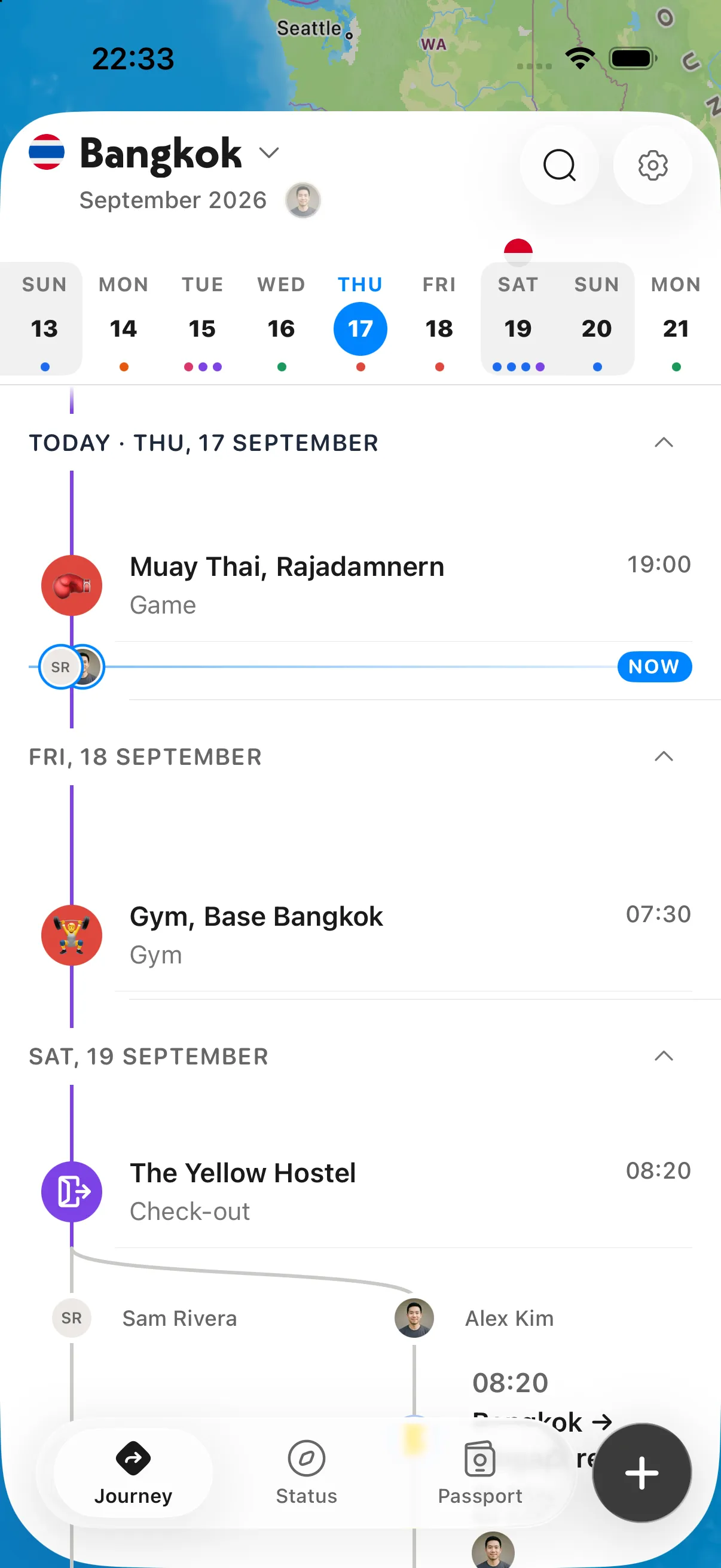 A NomadPoint screen with example data: a journey shown on the map, stop by stop.
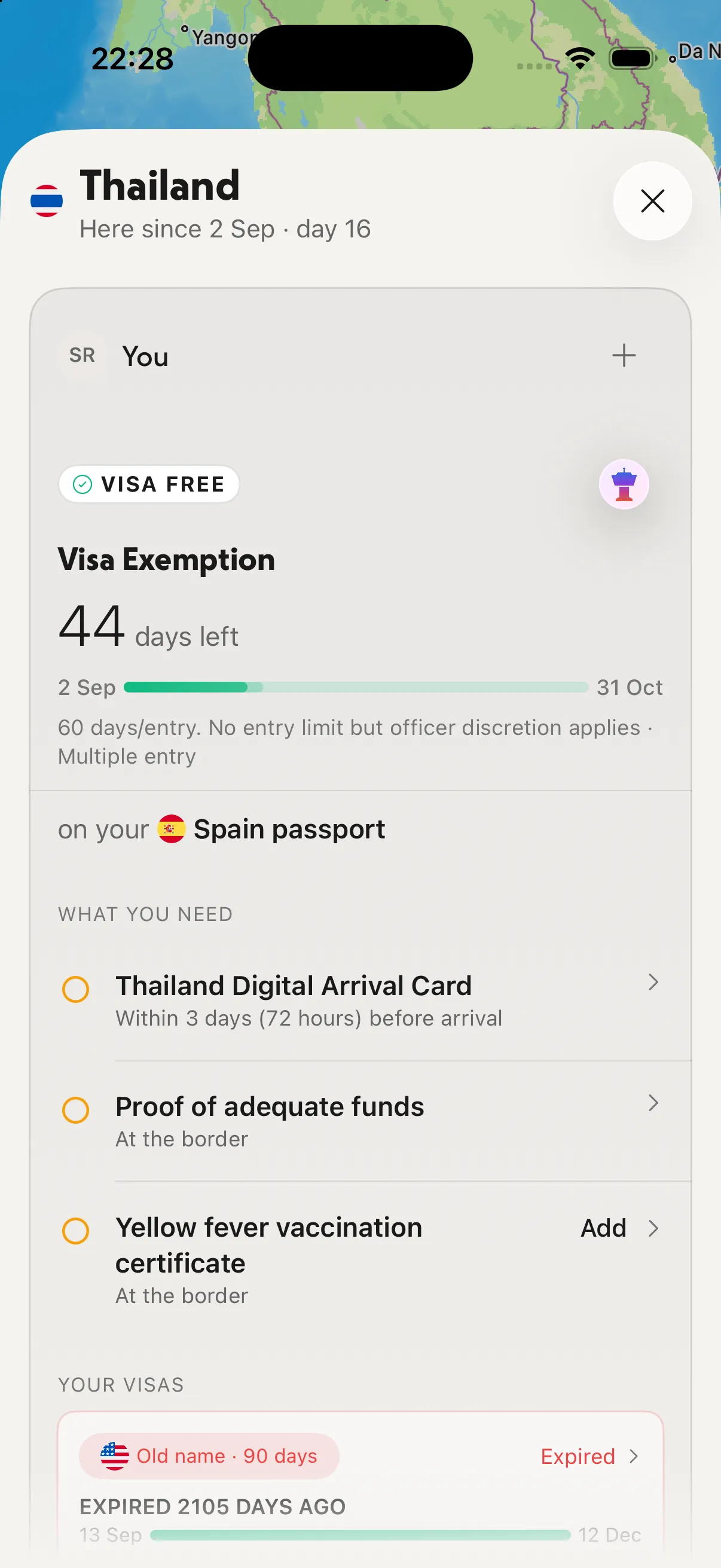 A NomadPoint screen with example data: entry rules and days left for one country.
All of that is free. NomadPoint Pro ($29.99 a year or $7.99 a month in the US) adds flight delay, gate and cancellation alerts, the travel-day Live Activity, and an alert before your visa or stay allowance runs out. The app runs on iPhone, iPad, Mac and Apple Watch, where the watch shows your next flight, where you're staying and your visa days left. For the other tools we'd pair it with, see the best apps for digital nomads, and for more on chaining several stops into one plan, our multi-city trip planner guide.
Frequently asked questions
Is Da Nang good for digital nomads?
It suits people who want a beach city to work from for a month, and who like having Hoi An and Hue close enough for side trips. The main thing to plan around is the September to December rainy season.
How long can I stay in Vietnam on an e-visa?
Up to 90 days, single or multiple entry, according to the Vietnamese government. Apply on evisa.gov.vn.
What is the best month for a month in Da Nang?
On the WMO averages, February to April is the driest and mildest stretch. October and November are the wettest months.
How do I get from Da Nang to Hue?
By train, including the Central Heritage Connection service that takes about three hours, or by road over the Hai Van Pass. Train tickets are sold on dsvn.vn.
Should I base in Da Nang or Hoi An for a month?
Da Nang has more cafes, apartments and the airport, while Hoi An is quieter. Splitting the month, with most of it in Da Nang and a week in Hoi An, gives you both without many moves.
Plan the whole month in one journey. NomadPoint puts Da Nang, Hoi An and Hue on one timeline, shows what your passport needs for Vietnam, and flags the nights and legs still missing. Free on iPhone, iPad and Mac.
NomadPoint Team
Written by nomads who've lived in 30+ countries. We build the tools we wish existed.